
Inovasense Insights
Expert perspectives on hardware engineering, IoT innovation, and EU technology sovereignty.
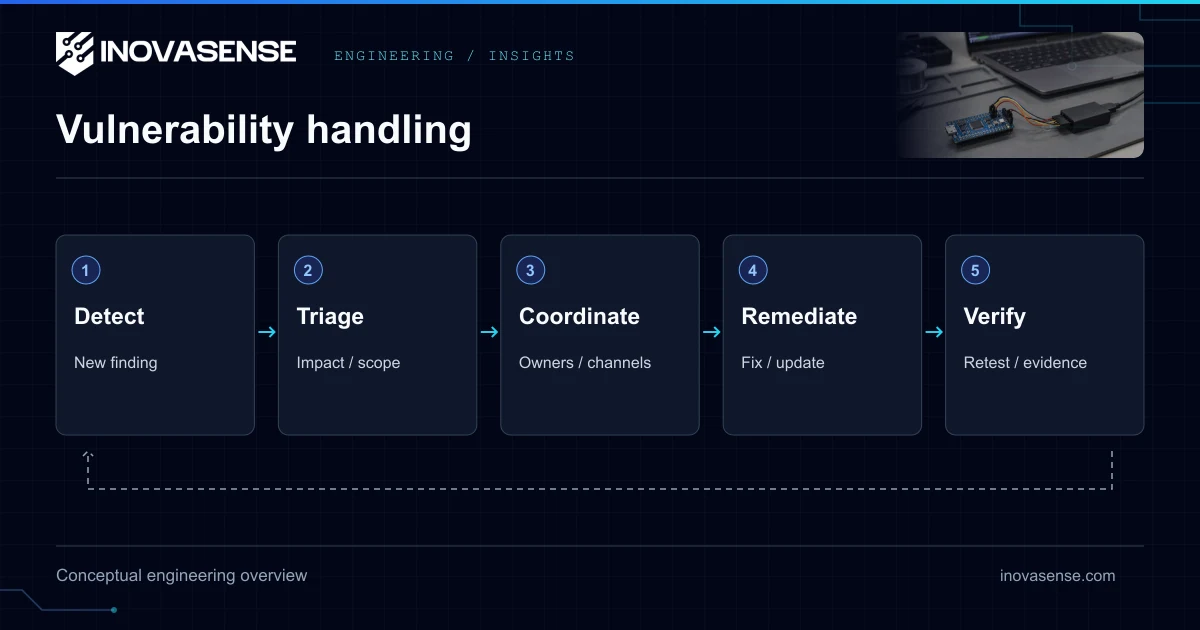
CRA Vulnerability Reporting: Step-by-Step Guide
CRA Article 14 reporting in force since 11 September 2026: scope, 24/72-hour awareness deadlines, final reports, SRP and operational preparation.
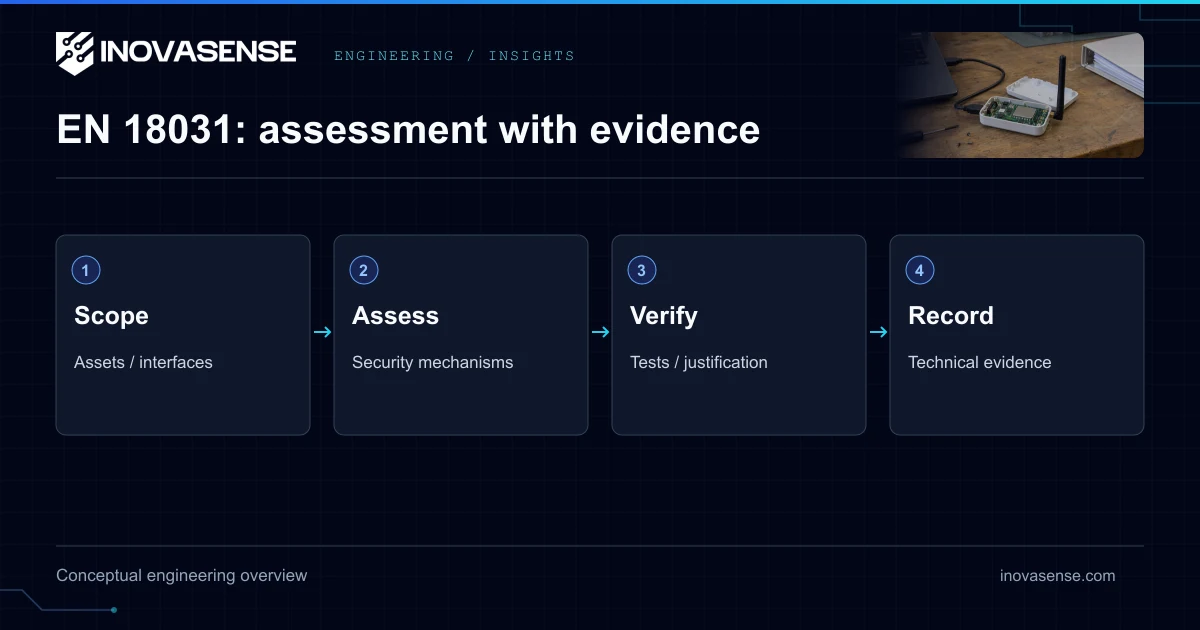
EN 18031 Compliance: What "Self-Assessment" Actually Means for Connected Hardware
What EN 18031 self-assessment actually requires under Module A — and where the documented compliance gaps most often appear for connected hardware.
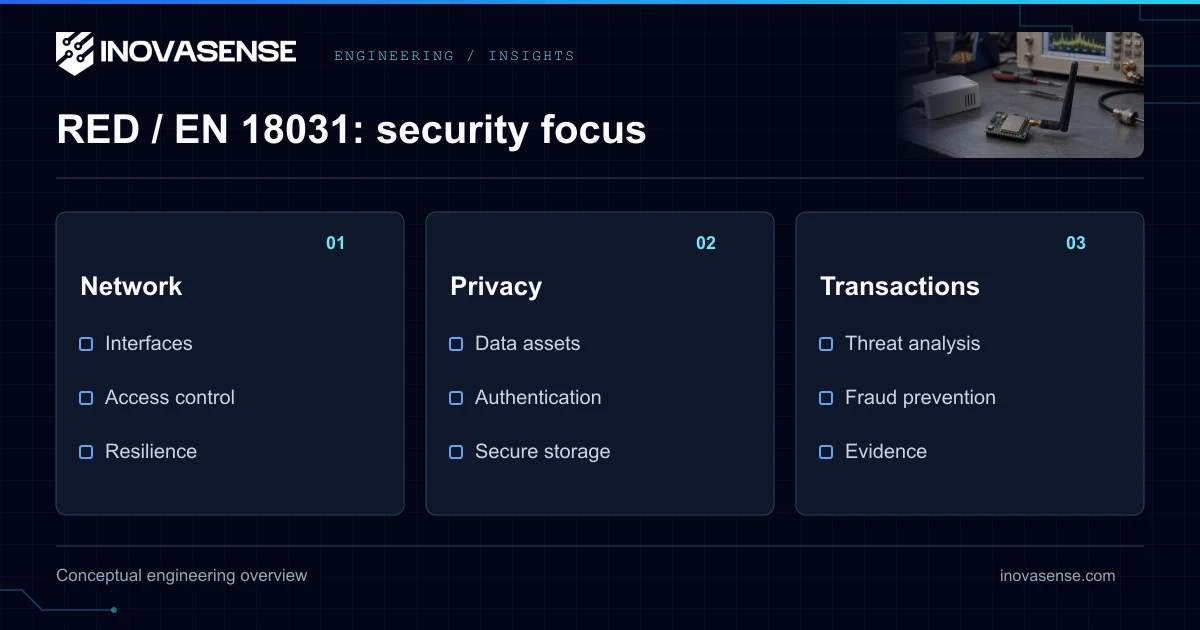
RED Delegated Act & EN 18031: Hardware Requirements
How the RED Delegated Act and EN 18031 define mandatory cybersecurity for radio equipment from August 2025 — with gaps that cannot be fixed in firmware.
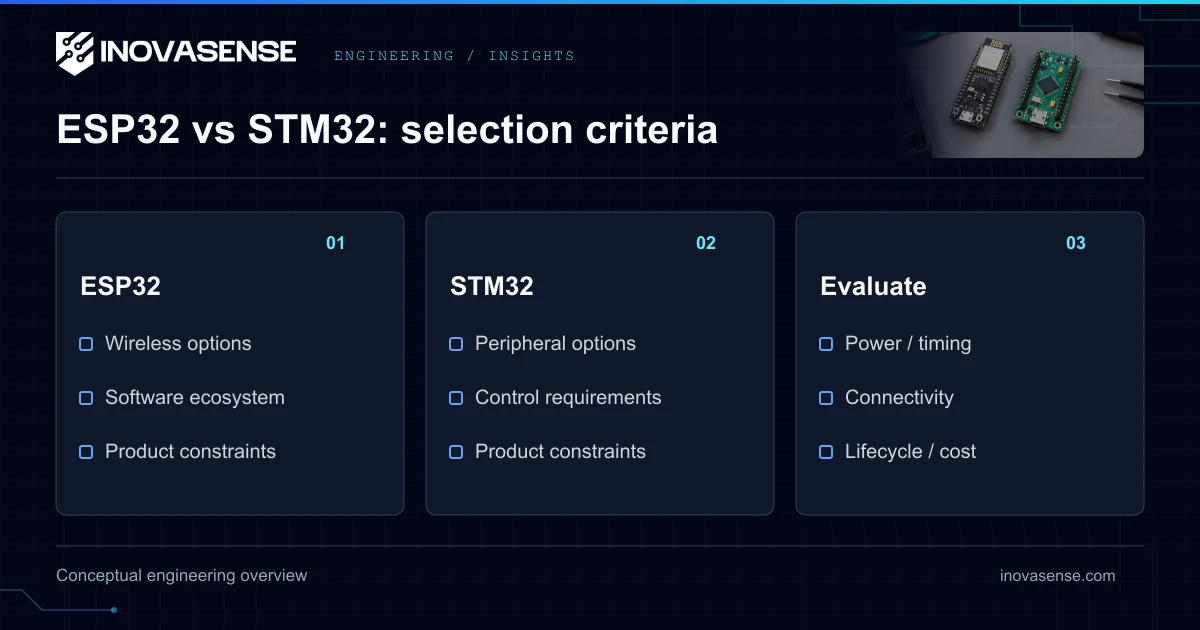
ESP32 vs STM32: Which MCU for Your Next Product?
Compare specific ESP32 and STM32 devices: connectivity, CPU architecture, battery measurements, security, software support and total product cost.
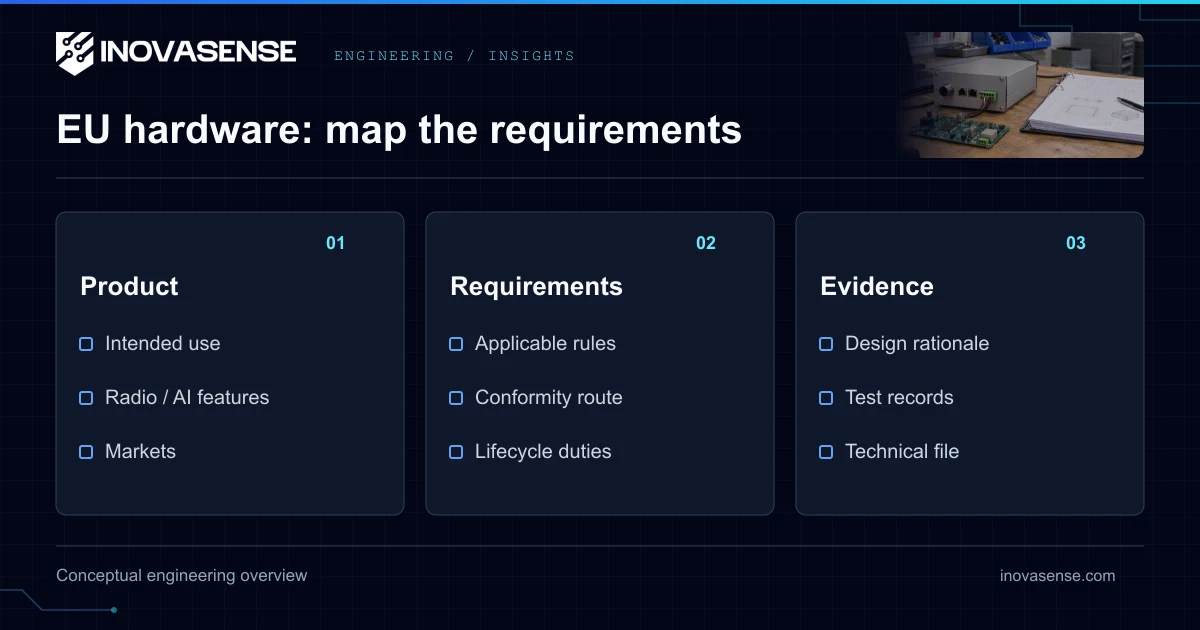
EU Hardware Legislation 2026: Complete Guide
Which EU rules apply to your hardware? Distinguish CRA, RED, AI Act, ESPR and NIS2 scope, application dates and product-specific obligations.
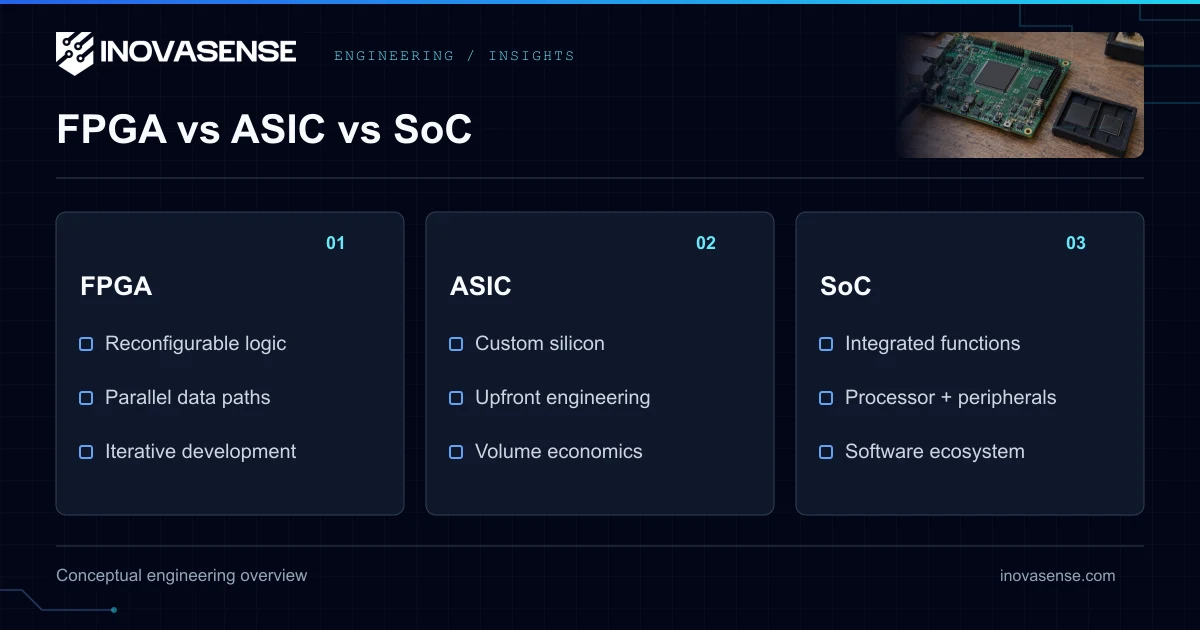
FPGA vs ASIC vs SoC: Engineering Decision Guide 2026 (with EU CRA Compliance)
FPGA, ASIC, or SoC? Compare cost, performance, power, time-to-market, EU CRA compliance overhead, and hardware sovereignty. 2026 engineering decision guide.
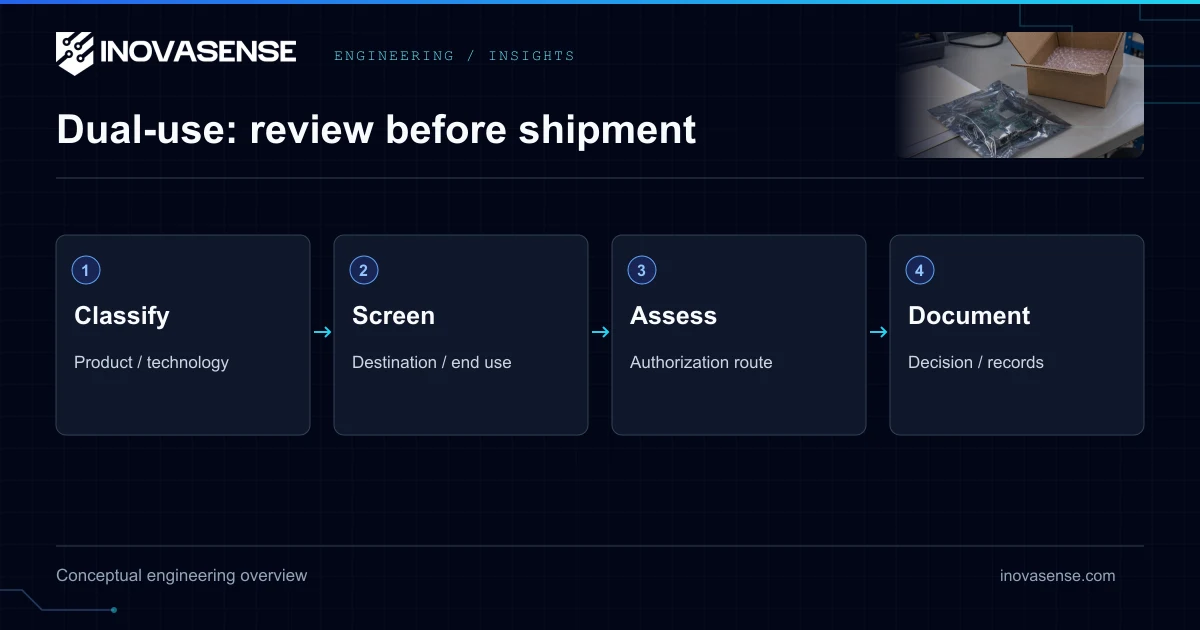
EU Dual-Use Export Controls for HW 2026
EU dual-use controls for electronics, FPGA IP and technology transfers: classification, destination, end use, authorisations and records.
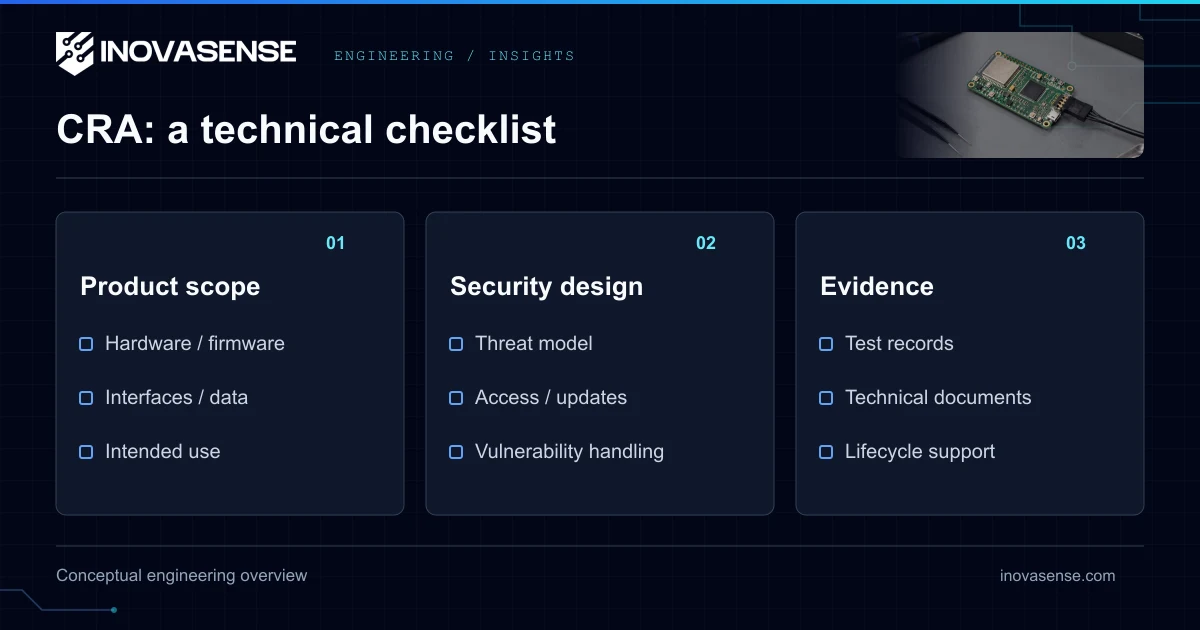
EU CRA Hardware Compliance Checklist
A risk-based CRA checklist for hardware: scope, product category, security requirements, SBOM, support period, reporting and conformity evidence.
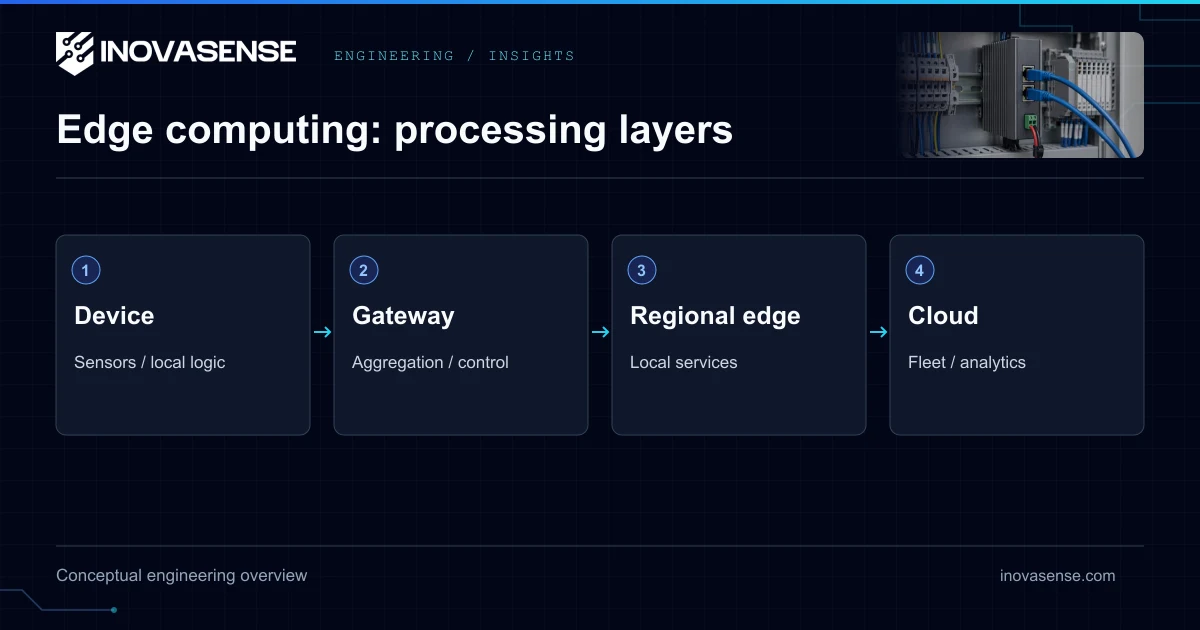
What is Edge Computing? Full Guide
Edge computing architecture for hardware engineers. Processing hardware (FPGAs, GPUs, NPUs), latency tiers, industrial use cases, and EU compliance.
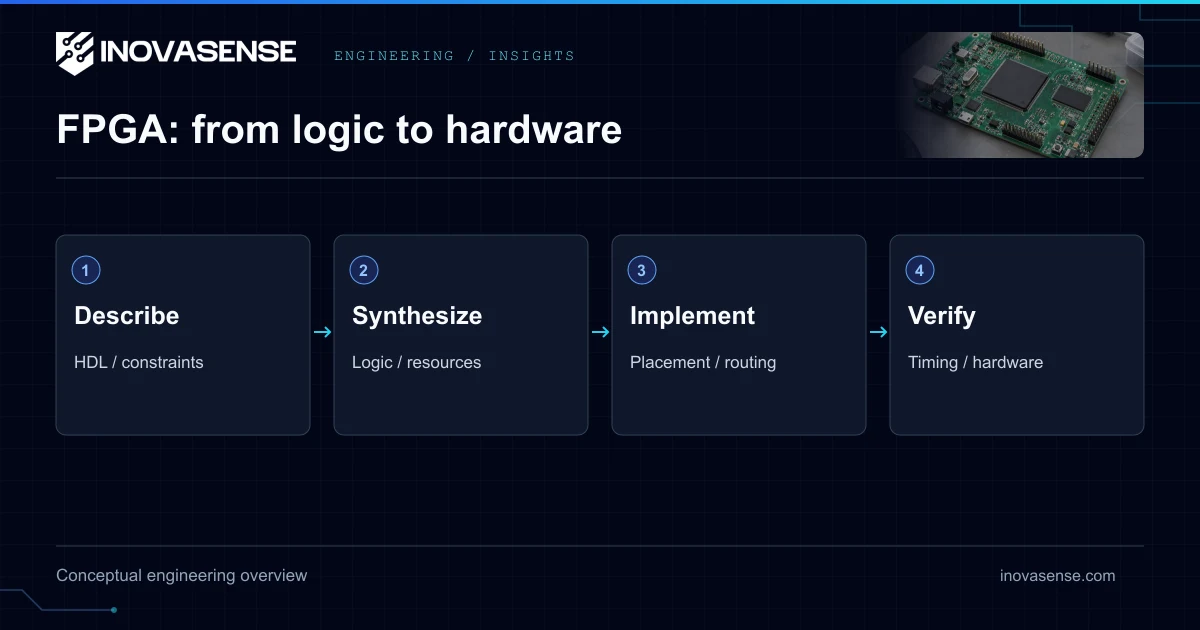
What Is an FPGA? Architecture, Development and Limits
Understand programmable logic, FPGA versus MCU and ASIC, development steps, power estimation, security and the actual CRA role.
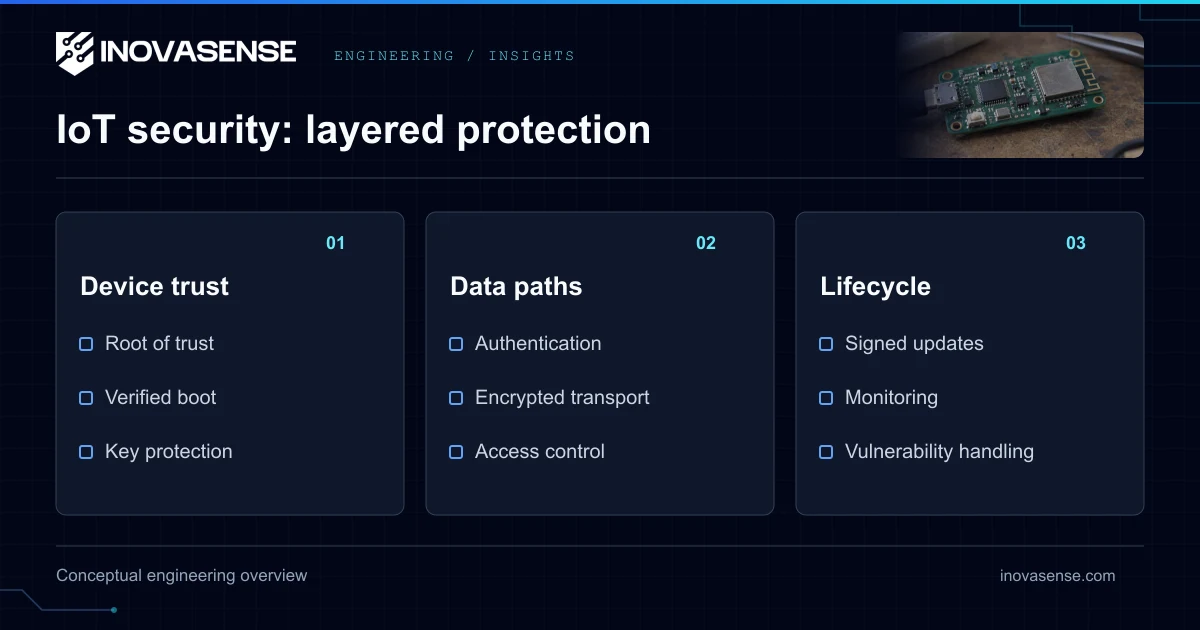
IoT Security Best Practices for Product Engineers
Practical IoT security across firmware, identity, APIs, updates and operations, with realistic hardware limits and accurate CRA obligations.
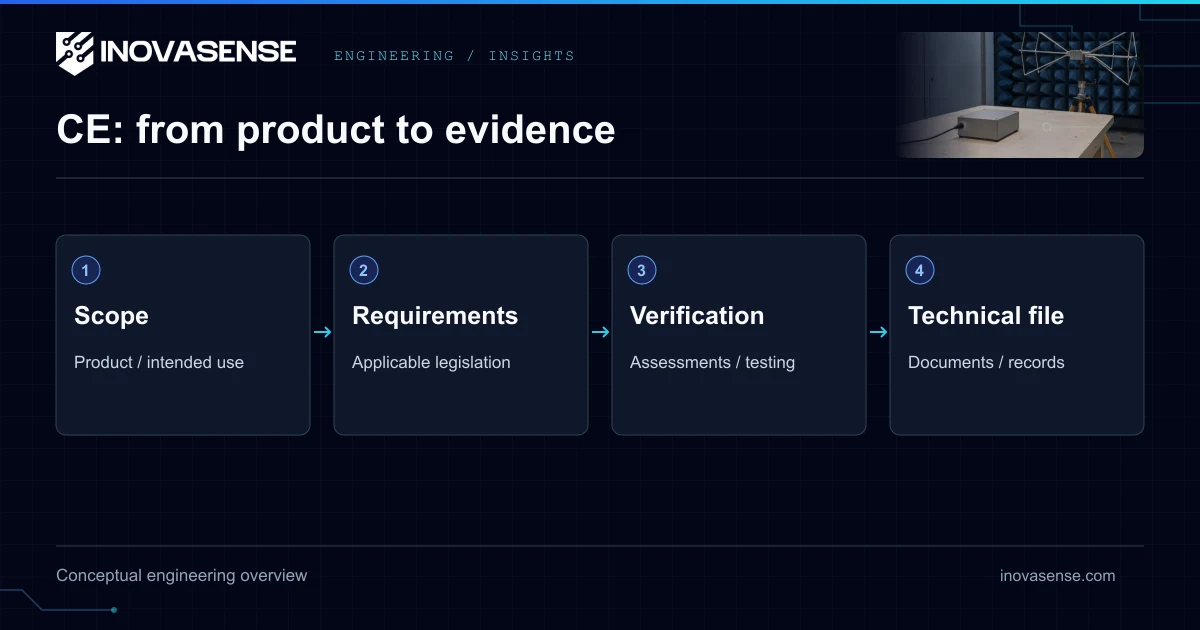
EU Electronics Compliance: CE, CRA & RED
A product-specific CE roadmap for electronics: applicable legislation, evidence, assessment routes, RED cybersecurity and CRA responsibilities.
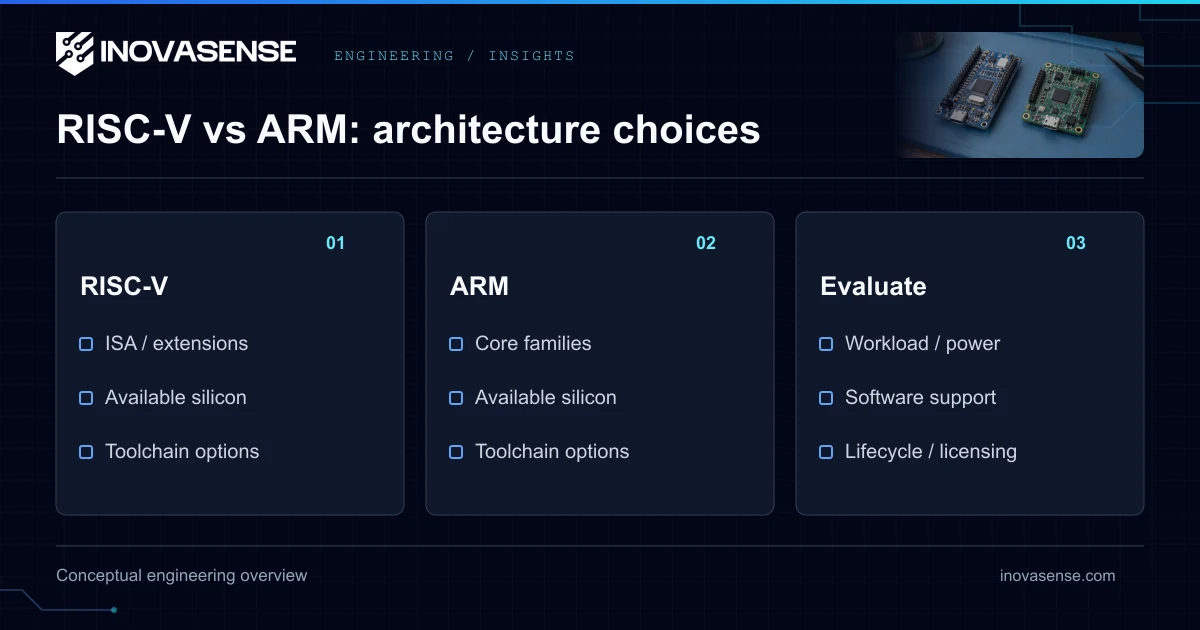
RISC-V vs ARM: Embedded Architecture
RISC-V vs ARM comparison for embedded engineers. ISA differences, real benchmarks, ecosystem maturity, costs, and EU sovereignty implications.
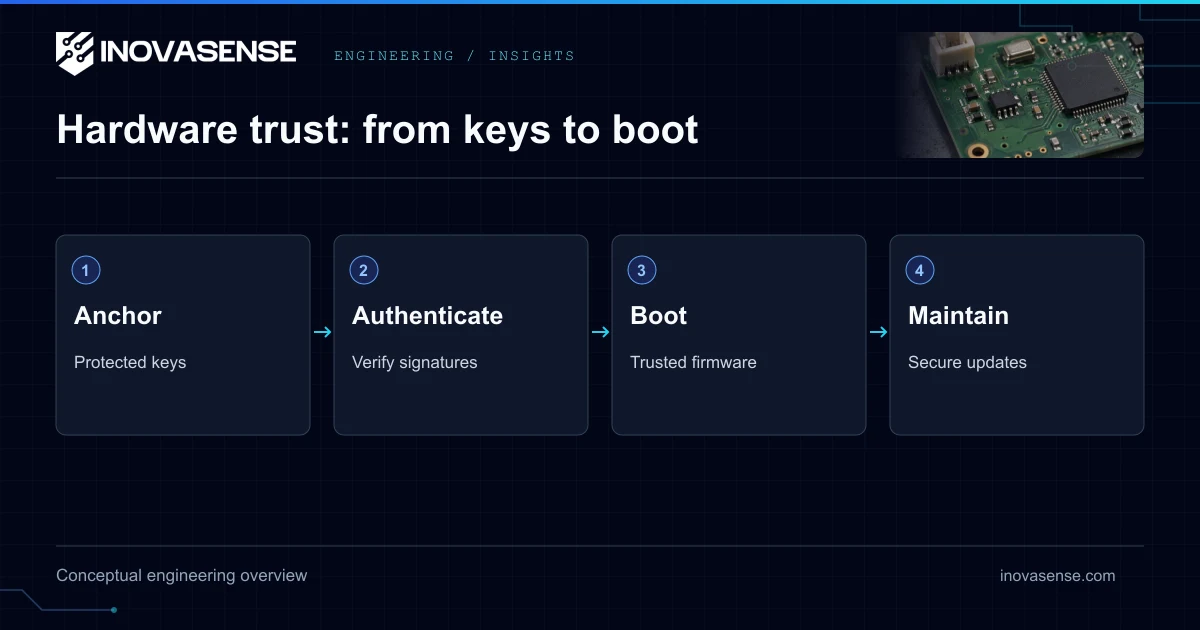
Hardware Security Design: Trust, Keys and Verification
Design hardware-backed security around a threat model. Understand root-of-trust limits, secure boot, key management and technology-neutral CRA requirements.
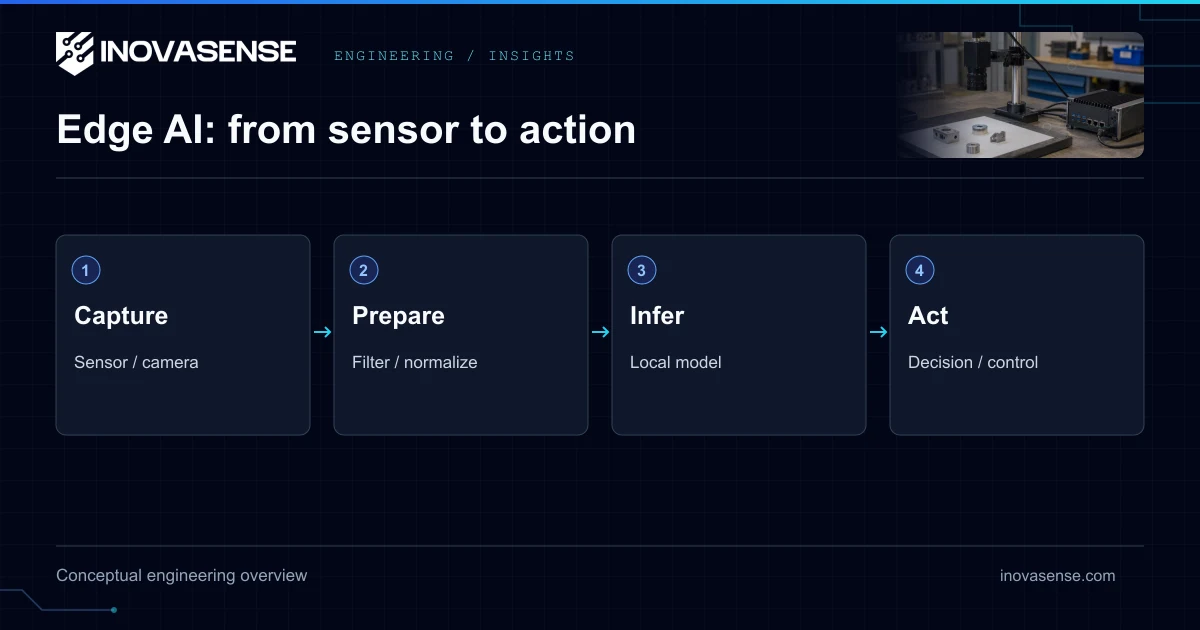
Edge AI in Industrial Applications
How to select and validate Edge AI hardware for industrial sensing and vision: latency, energy, model accuracy, update security and EU regulatory scope.
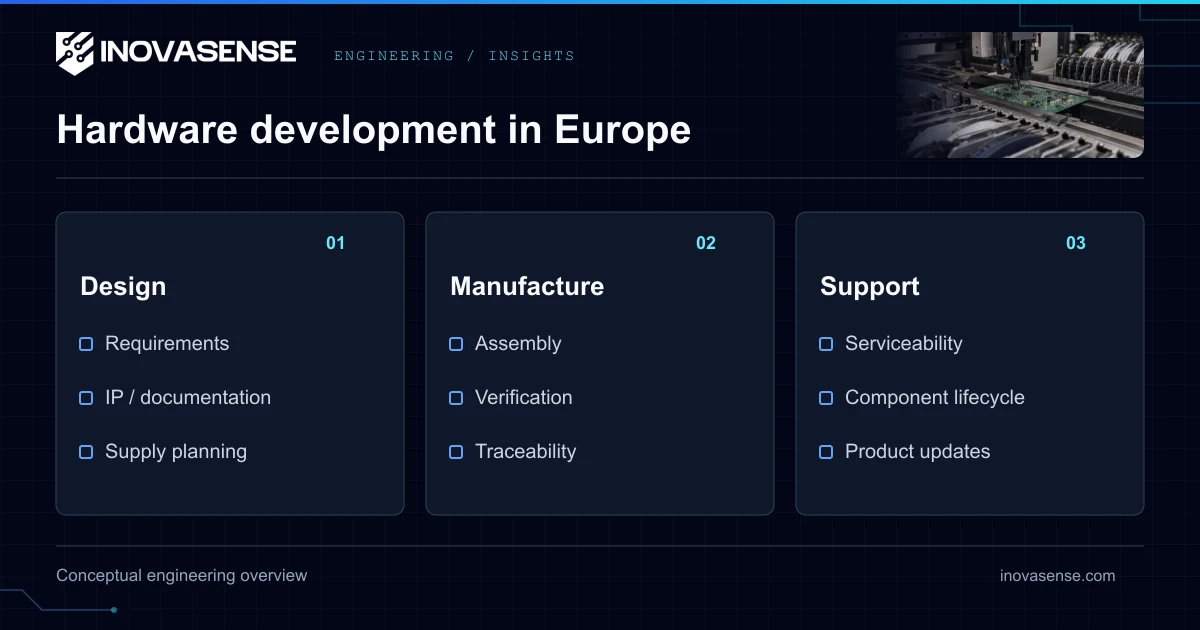
Made in EU: HW Development Advantage
EU-based hardware development provides regulatory alignment, IP protection, supply chain resilience, and Chips Act incentives. See the full case.
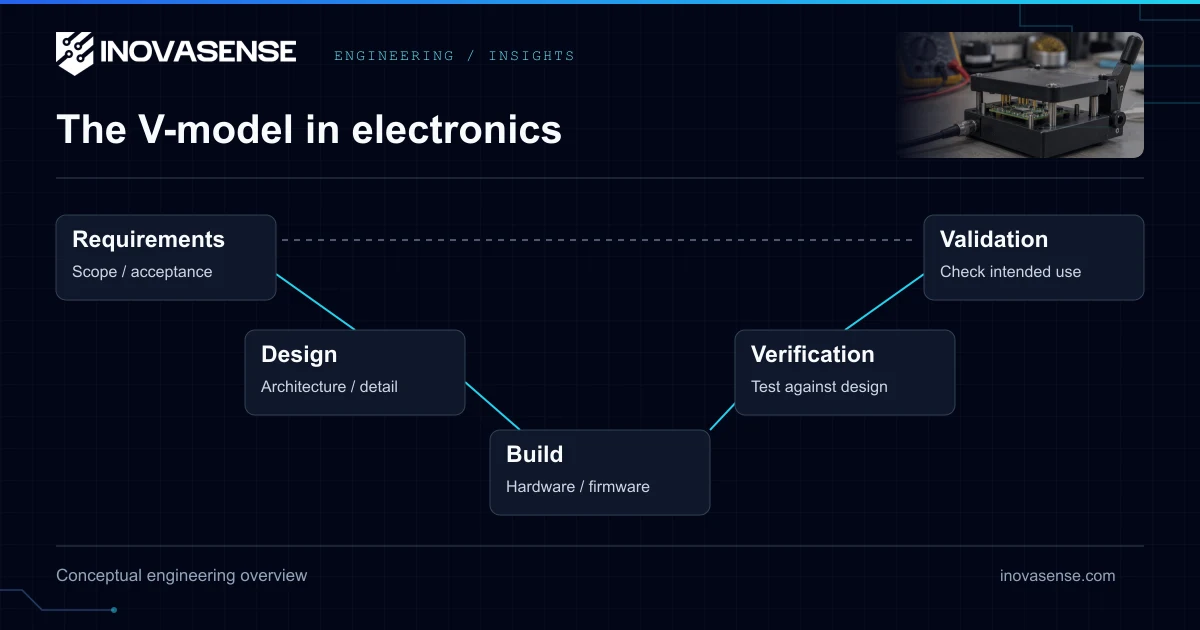
V-Model in Electronics Development
A structured V-model approach in electronics development prevents costly PCB respins, EMC failures, and certification delays. Learn the methodology.
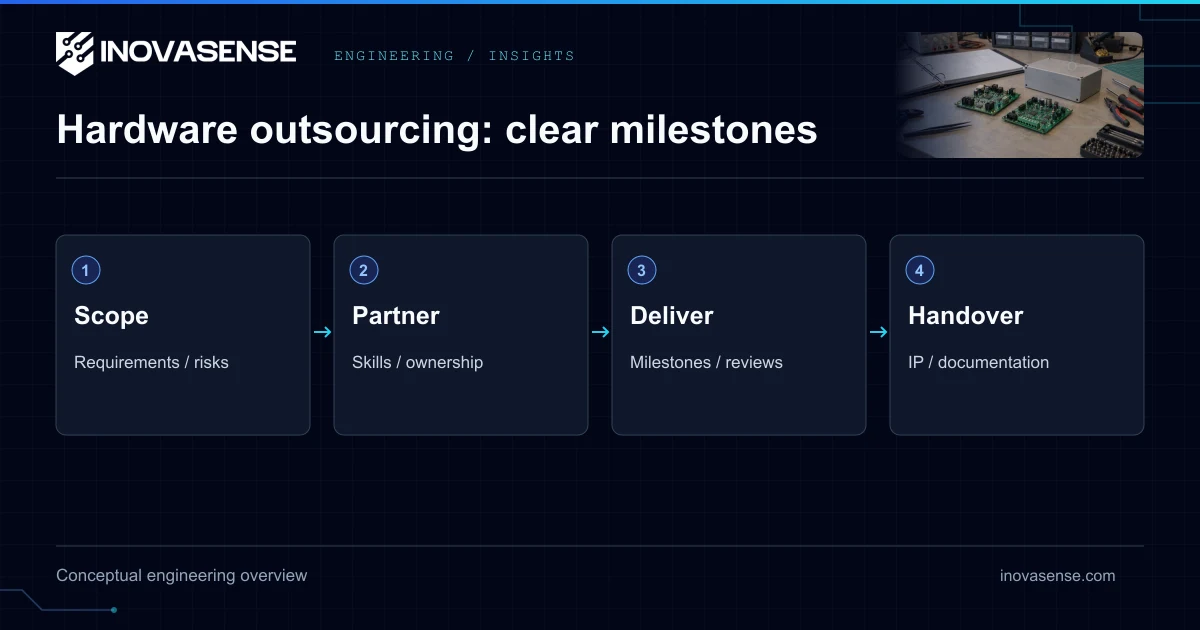
Outsourced HW Development Success
Outsourced hardware development cuts time-to-market by 30–50%. Learn partner evaluation criteria, engagement models, and IP protection strategies.
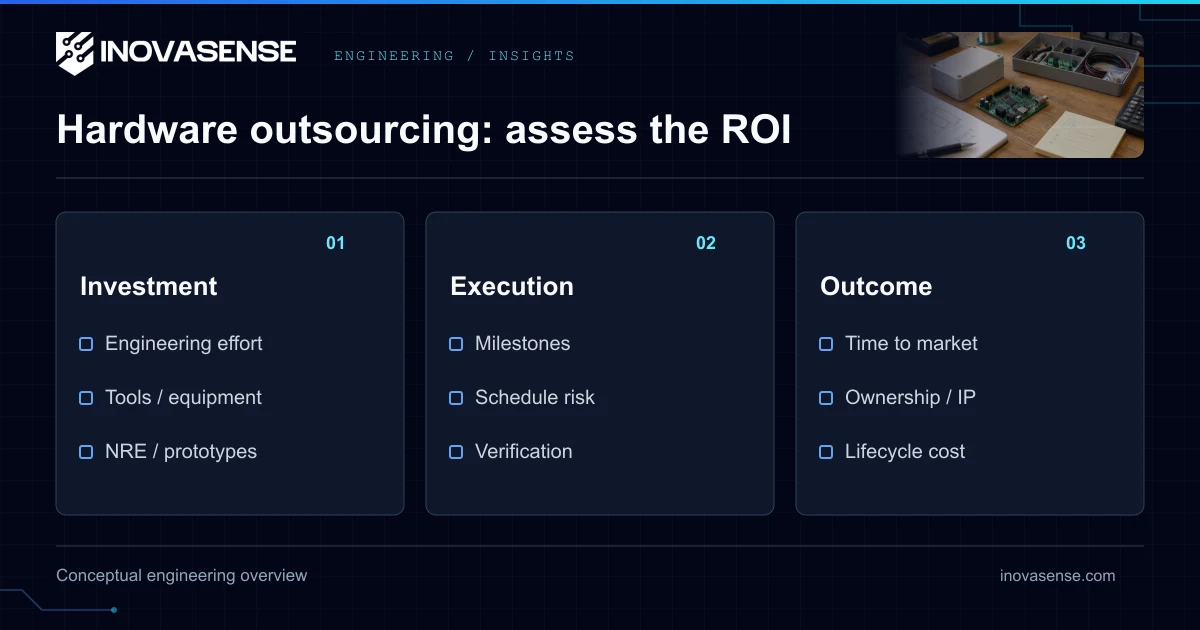
Outsourced Hardware Development ROI: 2026 Cost Breakdown
Outsourced hardware development cuts time-to-market by 30–50% and saves €500K–2M in CapEx. 2026 ROI breakdown with real cost comparison.
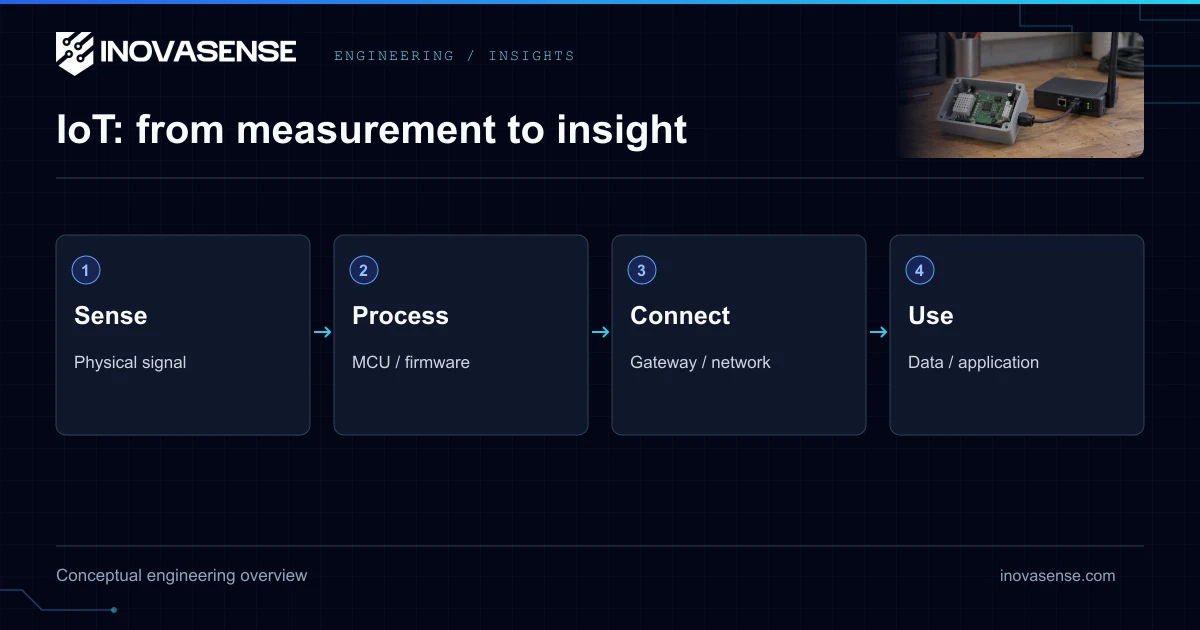
IoT Explained: Technical Deep-Dive
IoT connects devices via sensors, MCUs, and wireless protocols for real-time data. How it works — from silicon to cloud in 2026.
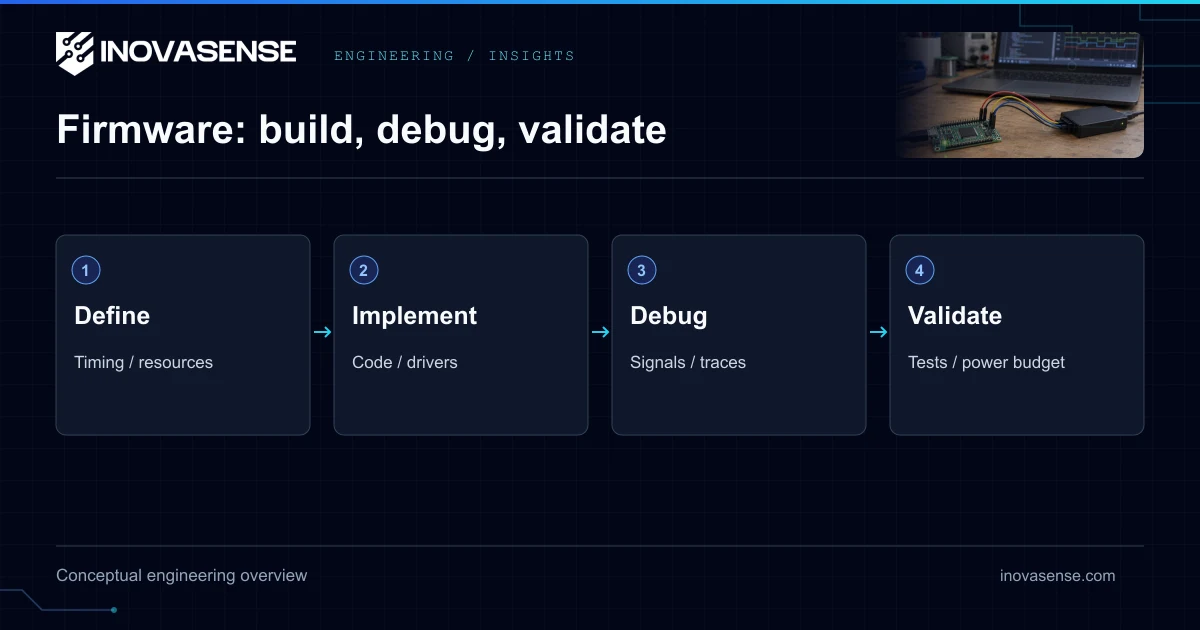
Embedded Programming: Engineer's Guide
Embedded programming guide — bare-metal C on Cortex-M, RTOS design, JTAG debugging, and TinyML. Updated for 2026 with Rust and RISC-V.
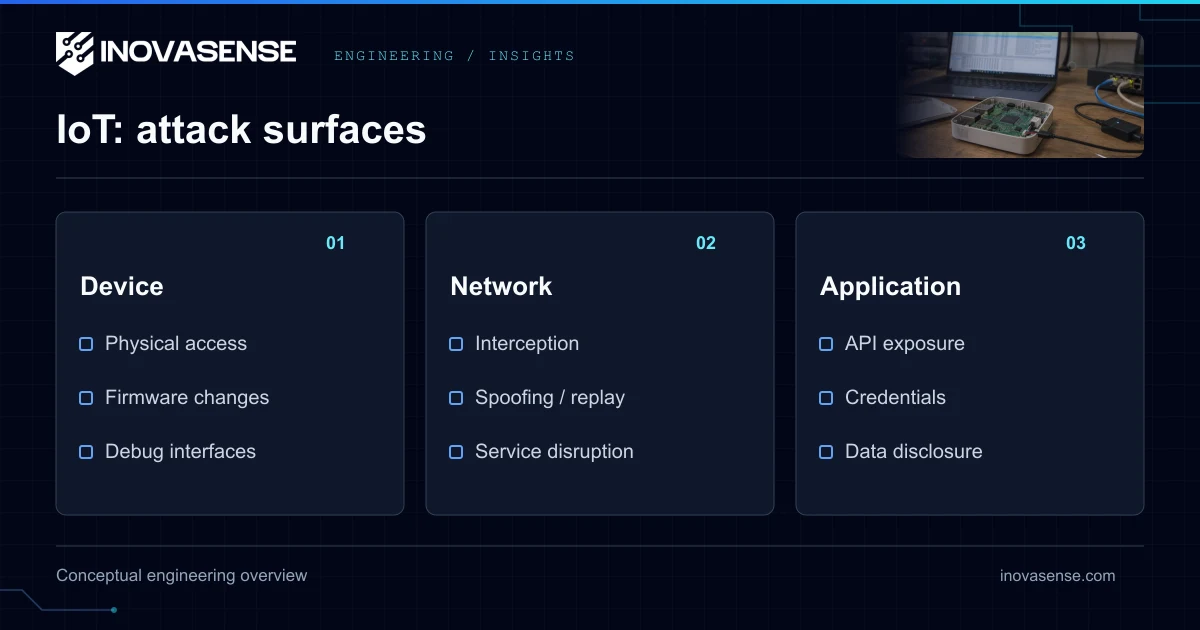
15 IoT Attack Types: Examples and Defences
Fifteen IoT threat categories, clearly labelled illustrative scenarios, a documented Mirai example and practical risk-based defences.